“ See, my mother love one man and marry another, and I am born, and all in me cry for that hill man—it is the cry from my mother in me."Her hand was holding his arm. "Hugh tells me you will go to America with Margaret. It is not true—tell me.""It is true, Helen," said Bryde; "I am loving her for that, God bless her.""Ah, but will not Helen be blessed a little too," said the lass, and for the first time there were tears in her eyes, and one great drop fell like a white pearl in the moonlight. "Dear, this is not you, so calm—that is like Hugh,—you are cold. Why do I cry and you not comfort me?" ”
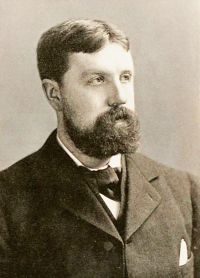
John Sillars
Biographical details
John Sillars, a Scottish novelist renowned for his vivid portrayals of rural life and intricate human relationships, is best known for his seminal work The McBrides, a novel that explores themes of love, familial conflict, and the enduring challenges faced by working-class communities in 19th-century Scotland.
His richly developed characters and poetic prose, exemplified in passages such as the poignant exchanges between Helen and Bryde McBride, reflect a deep engagement with the emotional and social tensions of his era. Sillars’ work, often compared to that of S.R. Crockett and Margaret M. Robertson, stands as a significant contribution to Scottish literature, capturing the resilience and raw beauty of rural life.
Quotes by John Sillars
“ There came a look of infinite tenderness on the fierce swarthy face of Bryde McBride."And afterwards, my brave lass?""Ah, then, I could not let you go. Jesu aid me . . . you are mine from the beginning; it is not right that you love that other. Be kind to me, Bryde, let me whisper—je t'adore, always I love you—thus," she cried, and kissed him wildly in a kind of madness. "I think," said she, "when I am standing with Hugh to be married, I think I will run to you," and then—"Take me home now," all brokenly she spoke, "my brave night is finished." ”
“ So we had the great days at the burning of heather, and when I would be running with a kindling here and there, and watching the lowes lick into the dry scrog with a hiss before the breeze, I would be thinking much of Dan and Ronny McKinnon and me in the blazing whins, and the gangers and excisemen and riff-raff of that kidney hallooing round us. Belle loved this burning and the very fierceness of the flames, with the eerie gloaming falling, and she would not be heeding the cries of Old Betty (for Betty was much with her these days for company) to be keeping indoors. ”