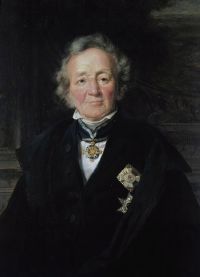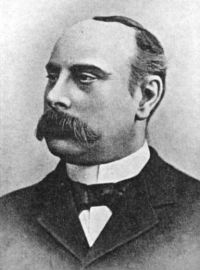
Martin A. S. Hume

Biographical details

Portrait of Martin A. S. Hume Martin A. S. Hume,  The Court of Philip IV.: Spain in Decadence

“ For months the cities of Portugal were the scene of prodigal pomp and devotion, that once more drove out of the muddled brain of the King all thought of the misery he had left behind him in Castile; and as he sat, on the 14th July 1619, under his gold and silken canopy in his palace at Lisbon, dressed in white taffeta and gold, and surrounded by the nobles of Portugal and Spain, it seemed as if the lying fable that made him personally the master of boundless wealth must be true, and that his stark and ruined realm was overflowing with happy abundance. ”
Source: Gutenberg

Portrait of Martin A. S. Hume Martin A. S. Hume,  The Year after the Armada, and Other Historical Studies

“ No dead and gone human visage looms so clearly through the mist of ages as that strange lymphatic face of Philip IV., which the genius of Velazquez delighted to portray from youth to age. The smooth-faced stripling in hunting dress, with his fair pink and white complexion, his lank yellow hair, and his great mumbling Austrian mouth, shows more plainly on canvas than he could have done whilst alive how weak of will and how potent of passion he was, how easily he would be led by the overbearing Count-Duke of Olivares to sacrifice all else for splendid shows and sensuous indulgence ”
Source: Gutenberg

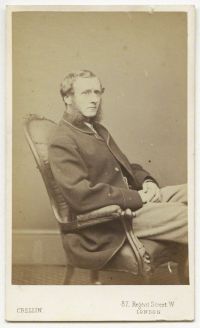
Portrait of Martin A. S. Hume Martin A. S. Hume,  The Wives of Henry the Eighth and the Parts They Played in History

“ The conquest of Granada, the unification of Spain, the greed, the cruelty, the lying, the treachery, the political marriages of all his children, and the fires of the Inquisition, were all means to the end for which he fought.
But fate was unkind to him. The discovery of America diverted Castilian energy from Aragonese objects, and death stepped in and made grim sport of all his marriage jugglery. Before he died, beaten and broken-hearted, he knew that the little realm of his fathers, instead of using the strength of others for its aims, would itself be used for objects which concerned it not.
”
Source: Gutenberg

Get perspective with Kwize: daily news enlightened by great literature