Summary

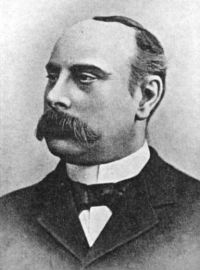
Portrait of Martin A. S. Hume Martin A. S. Hume The Year after the Armada, and Other Historical Studies

THE EVOLUTION OF THE SPANISH ARMADA.
Perhaps no character in history has been more misjudged and misrepresented than Philip II. For three centuries it has pleased English writers particularly, to portray him as a murderous ogre, grimly and silently plotting the enslavement of England for thirty years before the great catastrophe which reduced his vast empire to the rank of a harmless second-rate power. As a matter of fact he was a laborious, narrow-minded, morbidly conscientious man, patient, distrustful, and timid; a sincere lover of peace and a nater of all sorts of innovations.
Source: Gutenberg

Portrait of Martin A. S. Hume Martin A. S. Hume The Year after the Armada, and Other Historical Studies

The humble remonstrance of the Flemish nobles and Egmont's visit to Madrid had convinced the stealthy bigot that, if he insisted upon ruling his Flemish dominions according to Spanish methods, he could only do it by the ruthless power of the sword. His kindly and popular sister, Margaret of Parma, Flemish to the heart as she was, had already shown signs of sympathy with the demands of her countrymen, and was an unfit instrument for Philip's new plans. There was no one but hard-hearted old Alba who could be trusted to carry them out to the bitter end with the needful cat-like cruelty.
Source: Gutenberg

Portrait of Martin A. S. Hume Martin A. S. Hume The Year after the Armada, and Other Historical Studies

The Prince, great as he was, was only first among his peers, and if he could be magnificent so could his train, and Alba and Medina-Celi, Egmont and Aguilar, Pescara and Feria vied with their master in their finery. Each great noble—and there were twenty of them—took his train of servants in new liveries, and the Prince had a Spanish guard of 100 gentlemen in red and yellow, 100 Germans in the same uniform, but with silk facings, "as their custom is to go bravely dressed," 100 archers on horseback, and 300 servants in the same gaudy colours of Aragon.
Source: Gutenberg

Get perspective with Kwize: daily news enlightened by great literature