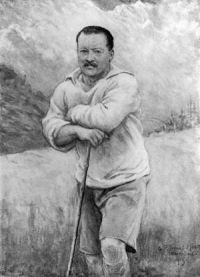
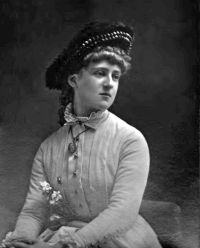
Philip Lake and Howard Knox and W. A. B. Coolidge

Biographical details

Philip Lake and Howard Knox and W. A. B. Coolidge 1911 Encyclopædia Britannica (1911)

The position of the Alps about the centre of the European continent has profoundly modified the climate of all the surrounding regions. The accumulation of vast masses of snow, which have gradually been converted into permanent glaciers, maintains a gradation of very different climates within the narrow space that intervenes between the foot of the mountains and their upper ridges; it cools the breezes that are wafted to the plains on either side, but its most important function is to regulate the water-supply of that large region which is traversed by the streams of the Alps.
Source: Wikisource

Philip Lake and Howard Knox and W. A. B. Coolidge 1911 Encyclopædia Britannica (1911)

If now we confine our attention to the alpine and higher regions of the Alps and exclude from our list all those plants which, however abundant in these regions, are not less so in the adjacent lowlands, we have left some 700 species (693, according to Dr Christ) . We must observe, as regards the plants of the lower alpine region, that it is the actual presence of a forest vegetation, rather than the theoretical tree-limit, which affects their vertical distribution; so that, e.g. they overflow into the extensive clearings made by man in the primeval mountain forests.
Source: Wikisource

Get perspective with Kwize: daily news enlightened by great literature