R. H. Taylor

Biographical details

R. H. Taylor,  The Almond in California

“ It must be borne in mind that a crop which it will pay to harvest does not necessarily pay for the cost of orchard maintenance. A crop is not considered a paying crop until it pays for the cost of maintenance as well as harvesting and handling. Almond orchards, as a rule, reach this point at from five to seven years of age. From this time on the trees should continue to increase in production from year to year, allowing for failures due to frost and other unfavorable conditions, until they are from 12 to 20 years old. ”
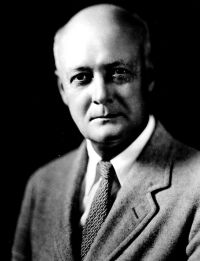
Source: Gutenberg

R. H. Taylor,  The Almond in California

“ The almond is the first of the deciduous fruit trees to start growth and come into bloom in the spring, and normally the last one to shed its leaves in the fall. In other words, it has a very short period of rest. When the trees are forced into premature dormancy by mites or lack of moisture, they soon reach the end of their normal rest period before the winter season is over. Then the first warm weather in spring will bring the trees into blossom. In some cases where moisture and temperature conditions are favorable late in the fall, they may actually blossom before the winter season. ”
Source: Gutenberg

R. H. Taylor,  The Almond in California

“ In summarizing the soil requirements for almond culture, it may be stated that the ideal almond soil is a medium loam, uniform in texture, or nearly so, to a depth of at least twelve feet, well drained and yet retentive of moisture for the use of the tree during the summer. Fortunately some of the best almond soils are situated along stream banks where the land is relatively high, and is, therefore, less subject to frost. These streams flowing from the mountains and foothills have built up their own beds by the detritus brought from the hills. ”
Source: Gutenberg

Get perspective with Kwize: daily news enlightened by great literature