“ Farm management brings constantly to one's attention new problems and new phases of old problems, whatever the type of farming. The skill with which these problems are met and a solution found for them determines the success or failure of the farm manager. To some men the details of the orchard business offer the greatest obstacles, while to others it is the general relationship of one detail to another which is difficult. ”
M. C. Burritt
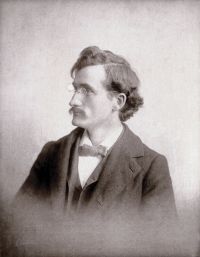
Biographical details
M. C. Burritt, a pragmatic agricultural writer, is best known for Apple Growing, a seminal work examining the complexities of orchard management and fruit cultivation. His texts emphasize themes such as the economic challenges of selling produce, the science of soil preparation, and the importance of managing pests through organized approaches.
Burritt’s analyses highlight the interdependence of technical knowledge and market strategy, arguing that profitability in fruit growing depends as much on navigating commercial pressures as on careful orchard maintenance. His work remains a cornerstone for understanding the delicate balance between agricultural practice and economic realism in 19th-century farming.
Quotes by M. C. Burritt
“ In many ways marketing is the measure of successful fruit growing. Of what use is it to prune well, cultivate well, spray thoroughly, or even pack well the finest kind of product, if after the expense of these operations is paid and the railroad and commission agents have had their share, no profit remains to the producer? ”
“ Trees are a crop, as much as corn or grass. If we grow a crop between the tree rows we must remember that we are double cropping the land and that it must be fed and cared for accordingly. There is absolutely no use in setting an apple orchard, expecting it to take care of itself, "just growing," like Topsy, as numerous dilapidated and broken down orchards bear ample testimony. ”
“ A necessity has arisen for the production of the best at a minimum cost, as well as for finding the best market for that product. In the rush for the best market every seller is apt to be guided only by his own immediate interest without due regard for the fact that others are acting in the same way or that there is a future. The result is the piling up of fruit in a market [148] of high quotations, and a subsequent drop in the price. Then all turn from such a market to a better one with the result that a famine often results where but a few weeks or even days before there had been a feast. ”
“ It may be impracticable to devise any other workable system, but it must be remembered that every man who touches a barrel of apples on its journey from producer to consumer must be paid for doing so, and this pay must come either out of the seller's price or be added to the buyer's price. But so long as present conditions of marketing and distribution prevail, so long will a selling agent in the general market be necessary, and the evil cannot be ameliorated by ranting against it. ”
“ Thus it often happens that one market may have more fruit than it can possibly dispose of at the time, while another, perhaps equally good, goes begging. Such conditions are ruinous to trade. Growers are disappointed and ascribe the cause to the commission man. Consumers are unable many times to profit by a glut in the market but promptly blame the middleman or the grower when the supply is small and the price high. ”
“ Thus understood orchard cultivation includes the sod mulch system as well as the stirring of the soil with various implements. In its more common and restricted meaning, however, cultivation is the stirring of the soil about plants to encourage growth and productivity. To have the apple tree in sod was once the commonly accepted method of orchard treatment—a method of neglect and of "letting well enough alone." With the advent of more scientific apple culture the stirring of the soil has come to be the more popular method. ”
“ In order to make a business of renovation and to do thorough work which means expense, there must be enough of the orchard to justify the expenditure of the time and money. This affects the results not only in expense, but in economy in management, equipment, and marketing. There should be at least an acre of say thirty trees, and better, more than that number to justify the expense of time and money necessary for renovation. One hundred trees would certainly justify it, other conditions being favorable. ”
“ The San José Scale, one of our worst apple tree pests, is a sucking insect extracting the juices of the tree from the trunk, limbs or branches, or even from the leaves and fruit when it is very abundant. At first the growth [100] is checked only, but as the insects develop their work finally results in the death of the part, unless they are destroyed. The insect winters in an immature condition on the bark under a grayish, circular, somewhat convex scale about the size of a pinhead. The young, of which a great many broods are produced, are soft bodied but soon form a scale. ”
“ Whether or not it is true that we have over-planted the apple, it must be admitted that at the present time the demand is so much greater than the supply that the poorer of our people cannot afford to use apples commonly, and that no class of farmer in the Northeastern States is more prosperous than the fruit growers. The new plantings must of necessity begin to bear and become factors in the market very slowly. ”
“ Many growers find it easier to produce good fruit than to market it at a good price, and this is especially true of the general farmer. Failure to market well spells failure in the business of fruit growing. Successful marketing presupposes a knowledge of the requirements of different markets as to quality, varieties, and supply demanded in those markets. Methods of distribution are also one of the great factors in this problem of marketing. ”
“ It now remains to point out another important function—that of a green manure crop adding humus and plant food to the soil. Not only do some cover crops add plant food and all humus to the soil, but they tend to conserve these by preventing leaching, especially of nitrates, and they help to render plant food more available by reworking it and leaving it in a form more available for the tree. They sometimes act as a protection against winter injury by holding snow and by their own bulk. They also help to dry out the soil in spring, thus making the land tillable earlier. ”
“ Few fruits can be utilized in as many ways as can the apple. In addition to the common use of the fresh fruit out of hand and of the fresh, sweet juice as cider, this "King of Fruits" can be cooked, baked, dried, canned, and made into jellies and other appetizing dishes, to enumerate all of which would be to prepare a list pages long. Few who have tasted once want to be without their apple sauce and apple pies in season, not to mention the crisp, juicy specimens to eat out of hand by the open fireplace in the long winter evenings. ”
“ Neither is it true, as some claim, that pruning is a devitalizing process. On the contrary it is often stimulating and may actually increase [49] the vigor of a weak or declining tree. All practical experience teaches us that pruning is a reasonable, necessary, and advantageous process. True, it is often overdone, and improperly done. As in many other things, certain fundamental principles underlie and should govern practice. When these are known and observed, pruning becomes a more simple matter. ”
“ Moreover an accurate knowledge of the financial conditions and facts in any business is of first importance to intelligent management. For these reasons every grower ought to keep careful records of the cost and income from each field or orchard every year in order to determine as accurately as possible what his crops have cost him per unit and per acre and what rate of interest he has realized on his investment. As farming becomes more intensive competition increases, costs multiply, and the margin of profit on any given unit becomes smaller. ”
“ The best crop immediately to precede trees is clover. Sometimes an application of one thousand five hundred to two thousand pounds of lime will help to insure a stand of clover and at the same time improve the physical condition of the soil. Fall plowing is a good practice on the medium loams and more [44] open soils, but on the heavy clays spring plowing is to be preferred, as when plowed in the fall these soils puddle and become hard to handle. Care should always be taken to keep the orchard well furrowed out as standing water is decidedly inimical to satisfactory tree-growth. ”
“ Buckwheat is probably about equally as good as rye for an orchard cover crop, although it does not produce quite as much organic matter. It will germinate at almost any season of the year even if it is very dry. It is a great soil improver because of its ability to feed and thrive on soils too poor for other crops, due to its numerous shallow feeding rootlets. It grows rapidly and covers the ground well, but like rye does not thrive as well in shade. Buckwheat should not be used to excess on the heavier types of soil as it is rather hard on the land. ”
“ Tilled trees make nearly twice the growth in a season that those in sod do, in fact there is danger of their making wood growth at the expense of fruit buds. Tillage also gives a deeper, better distributed root system.Despite the advantages and the disadvantages of each system, there are times, places, and circumstances under which one is more advisable than the other. On lands rich in humus and in plant food and level so as to be easily tillable, cultivation is without doubt the best system. ”
“ How often we have heard a farmer tell of the perfect apples that grew on a certain tree "when he was a boy," before people had generally heard of codling moth, San José scale, apple scab, or other troubles now only too common. ”
“ When to Plant.—The question of fall or spring planting is a less important one with a comparatively hardy fruit like the apple than it is with a more tender fruit like the peach. Apples may safely be planted in the fall when soils are well drained and when the young trees are well matured, both of which are very important if winter injury is to be avoided. Fall planting has several distinct advantages. During the winter fall planted trees become well established in the soil which enables them to start root growth earlier in the spring. ”
“ Out of season fruit is not in demand, but even the general market sometimes has special preferences.Almost every market has favorite varieties for which it is willing to pay a larger price than other markets. Just as Boston wants a brown egg and New York a white one, so these and other cities have their favorite varieties of apples. Some markets prefer a red apple, others a green one, although the former is most generally popular. In the mining and manufacturing towns working people want smaller green apples, or "seconds," because they are cheaper. ”
“ Cow peas are universally used as a cover and green manure crop in the South, but they do not thrive so well in the North. One and one half to two bushels of seed are required per acre. In the North the earlier maturing varieties of soy beans are almost equally good. One to one and one half bushels of seed are sown per acre.Leguminous cover crops are also the best and the cheapest source of nitrogen for the apple orchard, after they are well established. Their use may be overdone, however. Too much nitrogen results in a growth of wood at the expense of fruit buds. ”
“ If the relatively large net income per acre which it is possible to obtain from an apple orchard is to be secured, the best possible location is demanded.Contrary to the common ideas and practice of the past, the orchard should not be put upon [19] the poorest soil on the farm. The best orchards occupy the best soils, although fairly good results are often obtained on poor or medium soils. The relative importance which is attached to the orchard enterprise must also govern the choice of soil. If apples are to be a prominent crop they should be given the preference as to soil ”
“ Cow Horn is the best variety of turnips to use, as it is a large, rank grower. Use one to two pounds of seed to the acre. Rape makes an excellent pasture crop in an orchard both for sheep and hogs, but especially for the former. Eight or nine pounds of seed are necessary to the acre.Barley, oats, and millet are not as good crops as the foregoing, because, with the possible exception of millet, they make their best growth early in the season. Moreover they take up too much moisture from the soil at a time when the tree most needs this moisture. ”
“ Unless a person buys from a southern nursery and is an expert in handling trees, the two year old tree is to be preferred, but a skilful grower can make a more satisfactory tree from a one year old seedling.The average buyer must depend largely on his nurseryman for getting trees true to name, which is the reason for laying so much emphasis on purchasing from an honest dealer. Some nurserymen guarantee their varieties to be true to name, and all ought to do so. Buyers should demand it. The seeds of the apple rarely come true to the variety planted. ”
“ The general or wholesale market handles fruit in larger quantities, usually with a smaller margin of profit. A selling agent or commission man is the means of disposing of fruit in such a market, where competition is open to the whole country and sometimes to the world. Only standard well-known varieties find a ready [144] and profitable sale. Great attention is paid to appearance and comparatively little to quality. Fruit shipped to a wholesale market must be packed in a standard package, which is not returned, but goes with the fruit, and must be packed so as to endure rough treatment. ”
“ On the other hand, the pruning of the roots of a tree tends to check the growth of wood, the same as poor feeding. As above noted heading back a tree when dormant tends to stimulate it to a more vigorous growth.The habit of growth of a variety has much to do with its pruning. Some varieties of apples are upright, others are spreading growers. Climate and locality greatly affect these habits of growth. So also the habit of a young tree [50] often differs from the habit of the same tree in old age. The tendency is for a tree to continue its growth from its uppermost or terminal buds. ”
“ As a rule the seeds are smaller and a large seed usually has greater germinating power than a small one. This often means much at the time of the year when the cover crop is sown. Then legumes are more difficult to grow, requiring better soil conditions. Still these should be present in good orchard soils. Drainage must be good, the soil must be at least average in fertility and physical condition, it must not be sour—hence it is often necessary to use lime—and soils frequently require inoculation before they will grow legumes satisfactorily. ”
“ As long as apple [93] trees were scattered and few in number there was not the opportunity for the development of apple pests, but as soon as they became numerous the prosperity of bugs and minute plant parasites was wonderful to see. Another factor which has been at least partly responsible for the great increase in our insect life is that man has upset nature's balance by destroying so many birds, and, by interfering with their natural surroundings, driven them away. Birds are great destroyers of insects, and their presence in the orchard should be encouraged in every possible way. ”
“ Varieties.—A proper soil and a good location and site having been selected, the next important question to be decided is the varieties to be planted. So much and so variable advice is given on this question that many persons are at a loss as to what to plant and too often decide the matter by planting the wrong varieties. Rightly viewed, the question of varieties is a comparatively simple one. Personal [24] preference, tempered by careful study of certain factors and good judgment, are all that are required. Beginners, especially, are too apt to rely entirely on another's opinion. ”
“ Hogs do considerable rooting which prevents the formation of a stiff sod and itself may often amount almost to cultivation in well stocked orchards. A good deal of manure is added to the soil, especially when the hogs are fed outside the orchard. Hogs also destroy many insects by eating the wormy fruit.Pasturage of orchards has its advantages. It gives a double utilization of the land. It is a cheap method of management. When the animals are fed outside the orchard, as should always be the case, it adds considerable plant food to the soil. ”