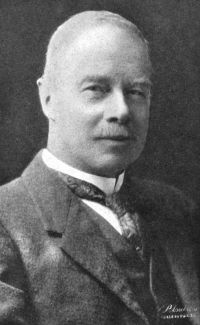
Robert McLachlan and George Herbert Carpenter

Biographical details

Robert McLachlan and George Herbert Carpenter 1911 Encyclopædia Britannica, Volume 8… (1911)

In most species of Calopterygina, and in some others, the prevailing colour of the body is a brilliant bronzy green, blue or black, but the colours in the other groups vary much, and often differ in the sexes. Thus in Libellula depressa the abdomen of the fully adult male is covered with a bluish bloom, whereas that of the female is yellow; but several days elapse before this pulverulent appearance is attained, and a comparatively young male is yellow like the female.
Source: Wikisource

Robert McLachlan and George Herbert Carpenter 1911 Encyclopædia Britannica, Volume 17… (1911)

In some species it is possible that they have scarcely more than one day’s existence, but others are far longer lived, though the extreme limit is probably rarely more than a week. The family has very sharply defined characters, which separate its members at once from all other neuropterous (or pseudo-neuropterous) groups.
These insects are universally aquatic in their preparatory states. The eggs are dropped into the water by the female in large masses, resembling, in some species, bunches of grapes in miniature.
Source: Wikisource

Robert McLachlan and George Herbert Carpenter 1911 Encyclopædia Britannica, Volume 8… (1911)

Some species are often seen at sea, far from land, in calm weather, in troops which are no doubt migratory; the common Libellula quadrimaculata, which inhabits the cold and temperate regions of the northern hemisphere, has been frequently seen in immense migratory swarms. One species (Pantala flavescens) has about the widest range of any insect, occurring in the Old World from Kamtchatka to Australia, and in the New from the Southern States to Chili, also all over Africa and the Pacific islands, but is not found in Europe.
Source: Wikisource

Get perspective with Kwize: daily news enlightened by great literature