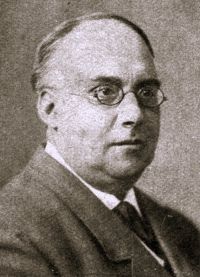
Wilhelm Bousset

Biographical details

Portrait of Wilhelm Bousset Wilhelm Bousset,  1911 Encyclopædia Britannica, Volume 12… (1911)

“ This dualism had not its origin in Hellenic soil, neither is it related to that dualism which to a certain extent existed also in late Greek religion. For the lower and imperfect world, which in that system too is conceived and assumed, is the nebulous world of the non-existent and the formless, which is the necessary accompaniment of that which exists, as shadow is of light. ”
Source: Wikisource

Portrait of Wilhelm Bousset Wilhelm Bousset,  1911 Encyclopædia Britannica, Volume 12… (1911)

“ All alike boast a mystic revelation and a deeply-veiled wisdom. As in many mystical religions, so in Gnosticism, the ultimate object is individual salvation, the assurance of a fortunate destiny for the soul after death. As in the others, so in this the central object of worship is a redeemer-deity who has already trodden the difficult way which the faithful have to follow. And finally, as in all mystical religions, so here too, holy rites and formulas, acts of initiation and consecration, all those things which we call sacraments, play a very prominent part. ”
Source: Wikisource

Portrait of Wilhelm Bousset Wilhelm Bousset,  1911 Encyclopædia Britannica, Volume 12… (1911)

“ Clearly then the question which the myth of the Primal Man is intended to answer in relation to the whole universe is answered in relation to the nature of man by this account of the coming into being of the first man, which may, moreover, have been influenced by the account in the Old Testament. That question is: how does it happen that in this inferior body of man, fallen a prey to corruption, there dwells a higher spark of the divine Being, or in other words, how are we to explain the double nature of man? ”
Source: Wikisource

Get perspective with Kwize: daily news enlightened by great literature