Summary

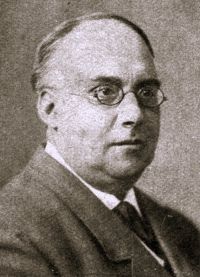
Portrait of Wilhelm Bousset Wilhelm Bousset 1911 Encyclopædia Britannica, Volume 12… (1911)

This dualism had not its origin in Hellenic soil, neither is it related to that dualism which to a certain extent existed also in late Greek religion. For the lower and imperfect world, which in that system too is conceived and assumed, is the nebulous world of the non-existent and the formless, which is the necessary accompaniment of that which exists, as shadow is of light.
Source: Wikisource

Portrait of Wilhelm Bousset Wilhelm Bousset 1911 Encyclopædia Britannica, Volume 12… (1911)

We must now proceed to define more exactly the peculiar and distinctive character of the Gnostic system. The basis of the Gnostic religion and world-philosophy lies in a decided Oriental dualism. In sharp contrast are opposed the two worlds of the good and of the evil, the divine world and the material world ὕλη, the worlds of light and of darkness. In many systems there seems to be no attempt to derive the one world from the other.
Source: Wikisource

Portrait of Wilhelm Bousset Wilhelm Bousset 1911 Encyclopædia Britannica, Volume 12… (1911)

All alike boast a mystic revelation and a deeply-veiled wisdom. As in many mystical religions, so in Gnosticism, the ultimate object is individual salvation, the assurance of a fortunate destiny for the soul after death. As in the others, so in this the central object of worship is a redeemer-deity who has already trodden the difficult way which the faithful have to follow. And finally, as in all mystical religions, so here too, holy rites and formulas, acts of initiation and consecration, all those things which we call sacraments, play a very prominent part.
Source: Wikisource

Get perspective with Kwize: daily news enlightened by great literature