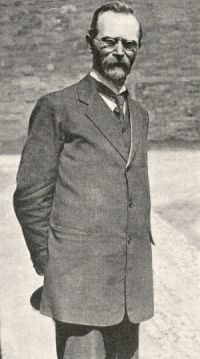
William Fleming

Biographical details

William Fleming Boulogne-Sur-Mer

Gaul was not only the name of the whole country, which embraced three provinces—Gallia, Aquitania, and Britannia—it was also the name of one of the provinces. As Gaul in its widest sense was a different country from the Island of Britain, so the province of Gaul was quite distinct from the province of Armoric Britain. The Gauls, Aquitanians, and Britons, all possessing, as Csesar testifies, separate governments and different nationalities, regarded one another as distinct races.
Source: Gutenberg

William Fleming Boulogne-Sur-Mer

It is, on the contrary, easy to imagine what a powerful effect a Saint, so stirred by the Spirit of God as his words express, would have on all with whom he came in contact after he had been freed from his duties as a shepherd. St. Patrick's history of himself suggests at least that his acquaintance with others, except those of his master's household, must have been made after his escape from captivity.
Professor Bury, however, is the latest convert to the opinion that St. Patrick fled to Gaul, and not to the Island of Britain, after his escape from captivity in Ireland.
Source: Gutenberg

William Fleming Boulogne-Sur-Mer

Patrick was born, simply because the Saint gives the name of Bonaven, or Bononia, as the city of his birth. St. Fiacc does not name Nemthur as a town; he simply tells us that St. Patrick was born at Nemthur, which, as has been proved, was both the name of the Caligula's tower and of the district in which that tower stood in the suburbs of Bonaven. The Scholiast is the first to call Nemthur a town, and evidently puts it down as the ancient name of Alcluid, or Dumbarton. This is the obvious meaning of the scholion: "Nemthur est civitas in septentrional! Britanni nempe Alcluida."
Source: Gutenberg

Get perspective with Kwize: daily news enlightened by great literature