Boulogne-sur-Mer

Definition and stakes

William Fleming,  Boulogne-Sur-Mer

“ Patrick was an Armorican Britain, born at Boulogne-sur-Mer.
Boulogne-sur-Mer, or ancient Bononia, was called by the same name, "Bonaven," as the town in which St. Patrick implies that he was born. Boulogne possessed a Roman encampment, and it was, therefore, Bonaven Taberniae, mentioned in the "Confession."
Caligula's tower, on the north-eastern cliffs, in the town and within the suburbs, was called "Turris Ordinis" by the Romans, but "Nemtor" by the Gaulish Celts, as Hersart de la Villemarque states in his "Celtic Legend."
”
Source: Gutenberg

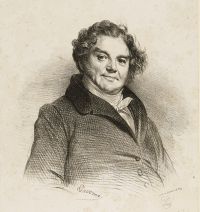
Portrait of Guy de Maupassant Guy de Maupassant,  Original Short Stories — Volume 10

“ Boulogne-Sur-Mer, January 22.—Our correspondent writes:
“A fearful accident has thrown our sea-faring population, which has suffered so much in the last two years, into the greatest consternation. The fishing smack commanded by Captain Javel, on entering the harbor was wrecked on the rocks of the harbor breakwater.
“In spite of the efforts of the life boat and the shooting of life lines from the shore four sailors and the cabin boy were lost.
”
Source: Gutenberg

William Fleming,  Boulogne-Sur-Mer

“ Forgetfulness of God, disobedience to His laws, which are also the best laws of human society, led to the ruin both of the colony of Bononia and of St. Patrick's family. One day a mutiny, from which the servants of Calphurnius could not have kept aloof, broke out amongst the soldiers in the camp, just at the time when pirates, who had come from different parts of the Irish coast and formed themselves into a fleet so as to plunder the towns on the sea coast of Gaul with greater security, took advantage of the dissensions amongst the inhabitants of Boulogne and besieged the town. ”
Source: Gutenberg

Get perspective with Kwize: daily news enlightened by great literature