Summary

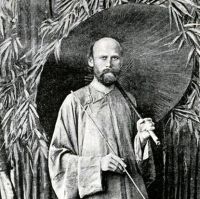
Portrait of A. E. Pratt A. E. Pratt Two Years Among New Guinea Cannibals

Ow-bow was allowed to take a gun with him, but no cartridges, and his empty weapon evidently was not impressive. My emissary’s experience was painful; Kafulu did not take his life, but he took his effects. Now, every Papuan carries with him as his most cherished possession a little net-bag, containing a charming collection of oddments dear to the savage mind—his knife, tobacco, bamboo pipe, matches, which he had earned, betel-nut and gourd, and little trophies of the chase.
Source: Gutenberg

Portrait of A. E. Pratt A. E. Pratt Two Years Among New Guinea Cannibals

For weeks before the annual trading expedition Hanuabada is full of life. At every turn one comes upon women crouching on the ground, fashioning lumps of clay into the wonderfully perfect pottery for which the village is famous. The men-folk, although they do not condescend to take part in the actual fashioning of the pots, are good enough to dig the clay, which they take out of the ground with a stone adze—a flat stone blade lashed to the shorter extremity of a forked stick, the longer extremity forming the handle.
Source: Gutenberg

Portrait of A. E. Pratt A. E. Pratt Two Years Among New Guinea Cannibals

The people, who belong to the Motuan tribe, as those of Hanuabada do, live by supplying the inland natives with fish. They go down to the fishing-ground, about two miles from shore, in small dug-out canoes, and this industry affords a very delightful touch of colour to the scenery of this part of the Papuan coast. The fishing is done at night, and just as the sun sinks the canoes come up past Hula in great crowds. In each boat are four or five fishermen, who pole up the shallows and paddle when they come to deeper water.
Source: Gutenberg

Get perspective with Kwize: daily news enlightened by great literature