Summary

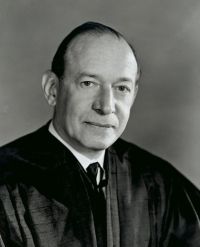
Portrait of Abe Fortas Abe Fortas Snyder v. Harris Gas Service Company…

When that determination has been made in accordance with the painstaking demands of Rule 23, there is authorized to be brought in the federal courts a single litigation, in which, both practically and in legal theory, the thing at stake, the 'matter in controversy,' is the total, combined, aggregated claim of the whole class. When that happens the courts do not obey, but violate, the jurisdictional statutes if they continue to impose ancient and artificial judicial doctrines to fragment what is in every other respect a single claim, which the courts are commanded to stand ready to hear.
Source: Wikisource

Portrait of Abe Fortas Abe Fortas Snyder v. Harris Gas Service Company…

The new Rule 23, by redefining the law of class actions, has, with the effect of statute, provided for a decision by the district courts that the nominally separate and legally 'several' claims of individuals may be so much alike that they can be tried all at once, as if there were just one claim, in a single proceeding in which most members of the class asserting the claim will not be personally present at all.
Source: Wikisource

Portrait of Abe Fortas Abe Fortas Snyder v. Harris Gas Service Company…

The decision that a class action is appropriate is not to be taken lightly; the district court must consider the full range of relevant factors specified in the Rule. However, whether a claim is, in traditional terms, 'joint' or 'several' no longer has any necessary relevance to whether a class action is proper. Thus, the amended Rule 23, which in the area of its operation has the effect of a statute, states a new method for determining when the common interests of many individuals can be asserted and resolved in a single litigation.
Source: Wikisource

Get perspective with Kwize: daily news enlightened by great literature