Summary

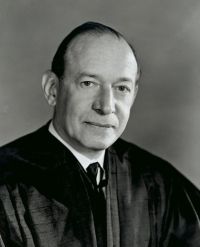
Portrait of Abe Fortas Abe Fortas Transportation-Communication Employees Union v…

It is even more than whether the clerks can be subjected to a proceeding to which they assert they are strangers and to which Congress did not intend that they be subjected. The Court today rules that whatever the collective bargaining agreements provide-regardless of their provisions, and of the understanding of the parties-the Board must award the disputed work to one union or the other, and that it cannot provide a remedy to members of both, even if their contracts should so demand.
Source: Wikisource

Portrait of Abe Fortas Abe Fortas Transportation-Communication Employees Union v…

As I shall discuss, its power is limited to adjudications of grievances and contract disputes between a union and a railroad. It cannot compel conversion of a complaint proceeding between a union and a railroad into a three-party proceeding to 'settle the entire dispute.' Certainly the courts should not refuse to enforce its award because the Board has failed to do something which the statute does not require or empower it to do.
Source: Wikisource

Portrait of Abe Fortas Abe Fortas Transportation-Communication Employees Union v…

There is no basis for this Court to dictate-and that is what it is here doing-that a collective bargaining contract may not be enforced in accordance with its terms but must be subordinated to a one job, one man theory. This Court cannot and should not impose its own views. The anti-featherbedding principle may or may not be an admirable theory, depending upon one's preconceptions and point of view. It does not now exist in the railway labor field.
Source: Wikisource

Get perspective with Kwize: daily news enlightened by great literature