Summary

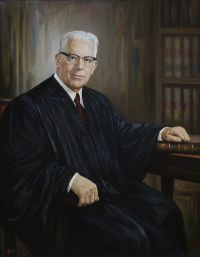
Portrait of Earl Warren Earl Warren Brotherhood of Railroad Trainmen v…

The only question which remains is whether the federal courts can compel compliance with the provisions of the Act to the extent of enjoining a union from striking to defeat the jurisdiction of the Adjustment Board. The Brotherhood contends that the Norris-LaGuardia Act [20] has withdrawn the power of federal courts to issue injunctions in labor disputes. That limitation, it is urged, applies with full force to all railway labor disputes as well as labor controversies in other industries.
Source: Wikisource

Portrait of Earl Warren Earl Warren Brotherhood of Railroad Trainmen v…

The Norris-LaGuardia Act, on the other hand, was designed primarily to protect working men in the exercise of organized, economic power, which is vital to collective bargaining. The Act aimed to correct existing abuses of the injunctive remedy in labor disputes. Federal courts had been drawn into the field under the guise either of enforcing federal statutes, principally the Sherman Act, or through diversity of citizenship jurisdiction. In the latter cases, the courts employed principles of federal law frequently at variance with the concepts of labor law in the States where they sat.
Source: Wikisource

Portrait of Earl Warren Earl Warren Brotherhood of Railroad Trainmen v…

We are asked to interpret that provision of the Railway Labor Act [1] which created the National Railroad Adjustment Board for the resolution of minor grievances in the event that the parties were unable to settle them by negotiation. The ultimate question is whether a railway labor organization can resort to a strike over matters pending before the Adjustment Board. [2]
The Chicago River and Indiana Railroad Company operates the switching and yard facilities at the Chicago stockyards. A segment of the employees of the River Road were represented by the Brotherhood of Railroad Trainmen.
Source: Wikisource

Get perspective with Kwize: daily news enlightened by great literature