Summary

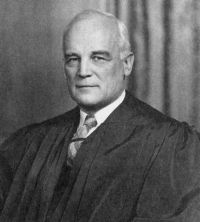
Portrait of Harold Hitz Burton Harold Hitz Burton California v. Taylor — Opinion of the Court

It is by no means unreasonable to assume that Congress, aware of these characteristics of labor relations in the interconnected system which comprises our national railroad industry, intended that collective bargaining, as fostered and protected by the Railway Labor Act, should apply to all railroads. Congress no doubt concluded that a uniform method of dealing with the labor problems of the railroad industry would tend to eliminate inequities, and would promote a desirable mobility within the railroad labor force.
Source: Wikisource

Portrait of Harold Hitz Burton Harold Hitz Burton California v. Taylor — Opinion of the Court

Under the Railway Labor Act, not only would the employees of the Belt Railroad have a federally protected right to bargain collectively with their employer, but the terms of the collective-bargaining agreement that they have negotiated with the Belt Railroad would take precedence over conflicting provisions of the state civil service laws.
Source: Wikisource

Portrait of Harold Hitz Burton Harold Hitz Burton California v. Taylor — Opinion of the Court

We are told by the parties that there are today 30 publicly owned railroads, all of which are switching or terminal roads, and only 11 of which are operated directly by the public. The fact that Congress chose to phrase the coverage of the Act in all-embracing terms indicates that state railroads were included within it. In fact, the consistent congressional pattern in railway legislation which preceded the Railway Labor Act was to employ all-inclusive language of coverage with no suggestion that state-owned railroads were not included.
Source: Wikisource

Get perspective with Kwize: daily news enlightened by great literature