Summary

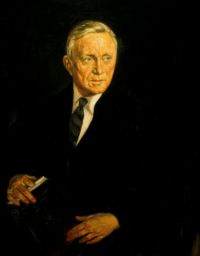
Portrait of William O. Douglas William O. Douglas Brotherhood of Railroad Trainmen v…

But I venture that in no case prior to today's decision has a State been barred from legislating in a field which is not specifically touched by the federal regulation and which remains after the federal remedies have spent themselves and proved to be of no avail.
The States should be allowed a free hand in labor controversies except and unless Congress has adopted a contrary policy.
Source: Wikisource

Portrait of William O. Douglas William O. Douglas Brotherhood of Railroad Trainmen v…

Why is that power greater than the power to protect the economy of the area? We have a finding that, if the conduct which the Court authorizes continues, there will be serious injury to 'numerous industries in Duval County'-industries that have no responsibility for the labor dispute.
The question, says the Court, is whether 'the States could prohibit the parties from engaging in any self-help.' If that is true, then the Act's scheme would be impaired. But that is not the issue. It is whether the State can prevent a secondary boycott which threatens to paralyze a whole community.
Source: Wikisource

Portrait of William O. Douglas William O. Douglas Brotherhood of Railroad Trainmen v…

To do so, we would have to fill in large gaps between the Railway Labor Act, 45 U.S.C. § 151 et seq. and many other specialized Acts of Congress that touch on pieces of the problems of labor in the railroad field. Once the remedies provided in the Railway Labor Act are exhausted, federal administrative remedies are at an end. No authority is empowered to settle the dispute; no compulsory arbitration is provided. The conditions of work may be as bad as the employees suffer them to be and made as good as they can agree upon through bargaining.
Source: Wikisource

Get perspective with Kwize: daily news enlightened by great literature