Summary

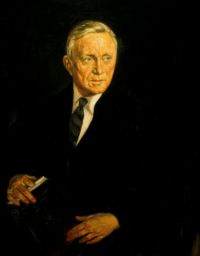
Portrait of William O. Douglas William O. Douglas Textile Workers Union of America v…

Any money judgment against a labor organization in a district court of the United States shall be enforceable only against the organization as an entity and against its assets, and shall not be enforceable against any individual member or his assets.'
There has been considerable litigation involving § 301 and courts have construed it differently. There is one view that § 301 (a) merely gives federal district courts jurisdiction in controversies that involve labor organizations in industries affecting commerce, without regard to diversity of citizenship or the amount in controversy.
Source: Wikisource

Portrait of William O. Douglas William O. Douglas Textile Workers Union of America v…

Congress was also interested in promoting collective bargaining that ended with agreements not to strike. [4] The Senate Report, supra, p. 16 states:
'If unions can break agreements with relative impunity, then such agreements do not tend to stabilize industrial relations. The execution of an agreement does not by itself promote industrial peace. The chief advantage which an employer can reasonably expect from a collective labor agreement is assurance of uninterrupted operation during the term of the agreement.
Source: Wikisource

Portrait of William O. Douglas William O. Douglas Textile Workers Union of America v…

Section 301 (b) makes it possible for a labor organization, representing employees in an industry affecting commerce, to sue and be sued as an entity in the federal courts. Section 301 (b) in other words provides the procedural remedy lacking at common law. Section 301 (a) certainly does something more than that. Plainly, it supplies the basis upon which the federal district courts may take jurisdiction and apply the procedural rule of § 301 (b) . The question is whether § 301 (a) is more than jurisdictional.
Source: Wikisource

Get perspective with Kwize: daily news enlightened by great literature