Federal law refers to the legal framework established by a central government within a federal system, where authority is divided between national and regional entities. This concept is examined through historical and judicial perspectives, such as the U.S. Constitution’s supremacy clause, which establishes federal law as superior to state law, as seen in cases like McCulloch v. Maryland.
Scholars such as Professor Scott Dodson examine federal law’s “gravitational pull” on state legislation, while judicial views from figures like Benjamin N. Cardozo and Potter Stewart emphasize the conflicts between federal statutes and local jurisdictions. The theme highlights a dynamic relationship between centralized power and regional self-governance, influenced by constitutional principles and judicial rulings.
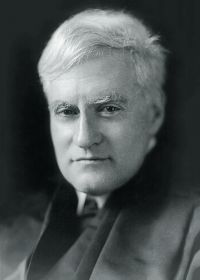 Benjamin N. Cardozo,
Gully v. First National Bank in Meridian…
Benjamin N. Cardozo,
Gully v. First National Bank in Meridian…