Summary

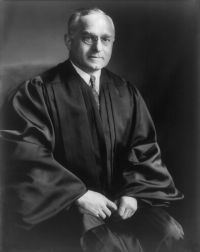
Portrait of Felix Frankfurter Felix Frankfurter Knapp v. Schweitzer — Opinion of the Court

It is plain that the amendment can no more be thought of as restricting action by the States than as restricting the conduct of private citizens. The sole-although deeply valuable-purpose of the Fifth Amendment privilege against self-incrimination is the security of the individual against the exertion of the power of the Federal Government to compel incriminating testimony with a view to enabling that same Government to convict a man out of his own mouth.
Source: Wikisource

Portrait of Felix Frankfurter Felix Frankfurter Knapp v. Schweitzer — Opinion of the Court

It was the same jealous concern that led to the restrictions on the National Government expressed by the first ten amendments, colloquially known as the Bill of Rights. These provisions are deeply concerned with procedural safeguards pertaining to criminal justice within the restricted area of federal jurisdiction. They are not restrictions upon the vast domain of the criminal law the belongs exclusively to the States. [2] Needless to say, no statesman of his day cared more for safeguarding the liberties that were enshrined in the Bill of Rights than did James Madison.
Source: Wikisource

Portrait of Felix Frankfurter Felix Frankfurter Knapp v. Schweitzer — Opinion of the Court

The essence of a constitutionally formulated federalism is the division of political and legal powers between two systems of government constituting a single Nation. The crucial difference between federalisms is in a wide sweep of powers conferred upon the central government with a reservation of specific powers to the constituent units as against a particularization of powers granted to the federal government with the vast range of governmental powers left to the constituent units.
Source: Wikisource

Get perspective with Kwize: daily news enlightened by great literature