Summary

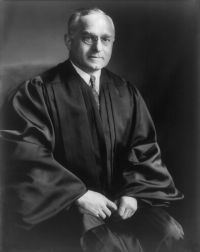
Portrait of Felix Frankfurter Felix Frankfurter Ullmann v. United States — Opinion of the Court

Assuming that the statutory requirements are met, does the Act give the district judge discretion to deny an application for an order requiring a witness to answer relevant questions put by the grand jury, and, if so, is the court thereby required to exercise a function that is not an exercise of 'judicial Power'? Did Congress provide immunity from state prosecution for crime, and, if so, is it empowered to do so? Does the Fifth Amendment prohibit compulsion of what would otherwise be self-incriminating testimony no matter what the scope of the immunity statute?
Source: Wikisource

Portrait of Felix Frankfurter Felix Frankfurter Ullmann v. United States — Opinion of the Court

It is relevant to define explicitly the spirit in which the Fifth Amendment's privilege against self-incrimination should be approached. This command of the Fifth Amendment ('nor shall any person * * * be compelled in any criminal case to be a witness against himself * * *') registers an important advance in the development of our liberty-'one of the great landmarks in man's struggle to make himself civilized.' [1] Time has not shown that protection from the evils against which this safeguard was directed is needless or unwarranted.
Source: Wikisource

Portrait of Felix Frankfurter Felix Frankfurter Ullmann v. United States — Opinion of the Court

They made a judgment, and expressed it in our fundamental law, that it were better for an occasional crime to go unpunished than that the prosecution should be free to build up a criminal case, in whole or in part, with the assistance of enforced disclosures by the accused. The privilege against self-incrimination serves as a protection to the innocent as well as to the guilty, and we have been admonished that it should be given a liberal application.
Source: Wikisource

Get perspective with Kwize: daily news enlightened by great literature