Summary

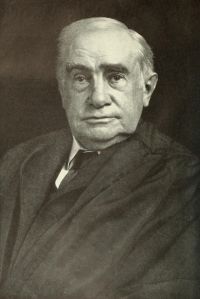
Portrait of Henry Billings Brown Henry Billings Brown Brown v. Walker — Opinion of the Court

The safety and welfare of an entire community should not be put into the scale against the reputation of a self-confessed criminal, who ought not, either in justice or in good morals, to refuse to disclose that which may be of great public utility, in order that his neighbors may think well of him. The design of the constitutional privilege is not to aid the witness in vindicating his character, but to protect him against being compelled to furnish evidence to convict him of a criminal charge.
Source: Wikisource

Portrait of Henry Billings Brown Henry Billings Brown Brown v. Walker — Opinion of the Court

If he secure legal immunity from prosecution, the possible impairment of his good name is a penalty which it is reasonable he should be compelled to pay for the common good. If it be once conceded that the fact that his testimony may tend to bring the witness into disrepute, though not to incriminate him, does not entitle him to the privilege of silence, it necessarily follows that, if it also tends to incriminate, but at the same time operates as a pardon for the offense, the fact that the disgrace remains no more entitles him to immunity in this case than in the other.
Source: Wikisource

Portrait of Henry Billings Brown Henry Billings Brown Brown v. Walker — Opinion of the Court

Hitchcock is that the privilege may be put forward for a sentimental reason, or for a purely fanciful protection of the witness against an imaginary danger, and for the real purpose of securing immunity to some third person, who is interested in concealing the facts to which he would testify. Every good citizen is bound to aid in the enforcement of the law, and has no right to permit himself, under the pretext of shielding his own good name, to be made the tool of others, who are desirous of seeking shelter behind his privilege.
Source: Wikisource

Get perspective with Kwize: daily news enlightened by great literature