Summary

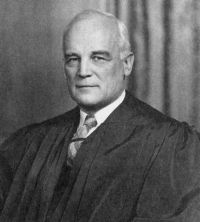
Portrait of Harold Hitz Burton Harold Hitz Burton National Labor Relations Board v…

The right to bargain becomes illusory if one is not free to press a proposal in good faith to the point of insistence. Surely adoption of so inherently vague and fluid a standard is apt to inhibit the entire bargaining process because of a party's fear that strenuous argument might shade into forbidden insistence and thereby produce a charge of an unfair labor practice. This watered-down notion of 'bargaining' which the Court imports into the Act with reference to matters not within the scope of § 8 (d) appears as foreign to the labor field as it would be to the commercial world.
Source: Wikisource

Portrait of Harold Hitz Burton Harold Hitz Burton National Labor Relations Board v…

I do not deny that there may be instances where unyielding insistence on a particular item may be a relevant consideration in the over-all picture in determining 'good faith,' for the demands of a party might in the context of a particular industry be so extreme as to constitute some evidence of an unwillingness to bargain. But no such situation is presented in this instance by the 'ballot' clause. 'No-strike' clauses, and other provisions analogous to the 'ballot' clause limiting the right to strike, are hardly novel to labor agreements.
Source: Wikisource

Portrait of Harold Hitz Burton Harold Hitz Burton National Labor Relations Board v…

The bargaining process should be left fluid, free from intervention of the Board leading to premature crystallization of labor agreements into any one pattern of contract provisions, so that these agreements can be adapted through collective bargaining to the changing needs of our society and to the changing concepts of the responsibilities of labor and management. What the Court does today may impede this evolutionary process. Under the facts of this case, an employer is precluded from attempting to limit the likelihood of a strike.
Source: Wikisource

Get perspective with Kwize: daily news enlightened by great literature