Summary

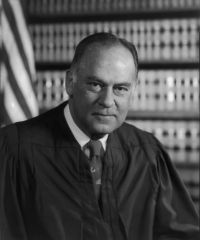
Portrait of Potter Stewart Potter Stewart Charles Dowd Box Company v. Courtney…

In considering these provisions of the proposed legislation in 1946, Congress manifested its complete awareness of both the existence and the limitations of state court remedies for violation of collective agreements. A principal motive behind the creation of federal jurisdiction in this field was the belief that the courts of many States could provide only imperfect relief because of rules of local law which made suits against labor organizations difficult or impossible, by reason of their status as unincorporated associations.
Source: Wikisource

Portrait of Potter Stewart Potter Stewart Charles Dowd Box Company v. Courtney…

Instead, Congress deliberately chose to leave the enforcement of collective agreements 'to the usual processes of the law.' It is implicit in the choice Congress made that 'diversities and conflicts' may occur, no less among the courts of the eleven federal circuits, than among the courts of the several States, as there evolves in this field of labor management relations that body of federal common law of which Lincoln Mills spoke.
Source: Wikisource

Portrait of Potter Stewart Potter Stewart Charles Dowd Box Company v. Courtney…

Moreover, there is explicit evidence that Congress expressly intended not to encroach upon the existing jurisdiction of the state courts.
The Labor Management Relations Act of 1947 represented a far-reaching and many-faceted legislative effort to promote the achievement of industrial peace through encouragement and refinement of the collective bargaining process. It was recognized from the outset that such an effort would be purposeless unless both parties to a collective bargaining agreement could have reasonable assurance that the contract they had negotiated would be honored.
Source: Wikisource

Get perspective with Kwize: daily news enlightened by great literature