Labor organization

Definition and stakes

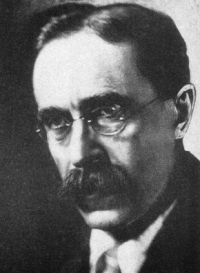
Portrait of William Lyon Mackenzie King William Lyon Mackenzie King,  The Four Parties to Industry (1919)

“ Without organization of Labor — where Capital, Management, and the Community are organized — what equality of relationship can there possibly be between the four parties to industry? And where, under such a condition, are the individual units of Labor likely to find themselves in the teeth of a world competition, more relentless where Labor is concerned than in the case of Capital or Management? ”
Source: Wikisource

Richard T. Ely and Thomas Sewall Adams,  The New International Encyclopædia (1905)

“ The labor organization is thus differentiated on the one hand from the strike—a temporary association—and on the other hand, from friendly societies and socialist organizations, which, though frequently recruited exclusively from the ranks of labor, are chiefly devoted to other ends than the improvement of the conditions of employment. Among labor organizations two distinct classes are discernible—those organized on the trade or occupational principle and those which transcend occupational bounds and attempt to amalgamate in a single, homogeneous organization, all classes of labor. ”
Source: Wikisource

Thames Williamson,  Problems in American Democracy

“ Most laborers are unable to secure either the training or the capital necessary to set themselves up as independent business men.
183. RISE OF LABOR ORGANIZATIONS.—The risks and limitations which the factory system imposes upon the laboring classes have encouraged workmen to organize for the purpose of promoting their mutual interests. The individual gains, it has been found, when his interests are supported by a group of workmen acting as a unit, and bringing their united pressure to bear upon the employer. The labor organization has been the result of this discovery.
”
Source: Gutenberg

Get perspective with Kwize: daily news enlightened by great literature