Summary

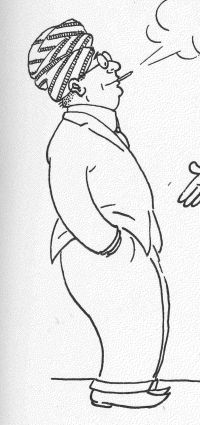
Portrait of Achmed Abdullah Achmed Abdullah The Mating of the Blades — Chapter 2 (1920)

For, since time immemorial, have the autocrats of Asia maintained the democratic principle that ability is the only qualification for the highest services; have they stooped among the crowd, clutched a common soldier, a slipper bearer, a tobacconist, a renegade, even a slave, and given him limitless power, absolutely disregarding all the barriers of birth and cultivation and asking of him nothing but success.
Thus it was Ayesha Zemzem who shared the princess' peacock throne when, shortly afterwards, Babu Chandra had been granted another audience.
Source: Wikisource

Portrait of Achmed Abdullah Achmed Abdullah The Mating of the Blades — Chapter 2 (1920)

There is something sinister in the relentlessness in which inheritance may force people into a position they are not framed to fill, thrusting power into their hands and judgments into their mouths, whether they desire it or not.
Thus with Aziza Nurmahal.
The peacock throne and the autocratic power which it embodied were meant for men of crunching, clouting, merciless strength of mind and body; men like her father, who had ruled his turbulent subjects with an iron, rather saturnine hand and with the loyal help of his old prime minister, Hajji Akhbar Khan, Itizad el-Dowleh.
Source: Wikisource

Portrait of Achmed Abdullah Achmed Abdullah The Mating of the Blades — Chapter 2 (1920)

Again there was a ripple of laughter and whispered, malign words; the Sheik-ul-Islam quoting with pontifical unction that power without wisdom was like a cloud without rain, Gulabian advancing artlessly that it is impossible to clap with one hand alone, and the governor of the eastern marches pleasantly completing the circle of Oriental metaphors by mentioning that some people were on horseback—while their brains walked on foot.
Source: Wikisource

Get perspective with Kwize: daily news enlightened by great literature