Summary

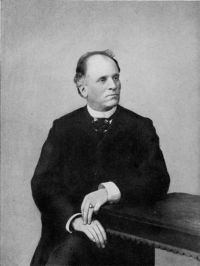
Portrait of Adolph Francis Alphonse Bandelier Adolph Francis Alphonse Bandelier Documentary History of the Rio Grande Pueblos of New Mexico…

Neither can folklore and tradition, notwithstanding their decisive importance in a great many cases, be touched upon except when alluded to in the sources themselves. I am fully aware, as I stated in presenting the history of the Zuñi tribe, that a history based exclusively on documents, whether printed or written, must necessarily be imperfect because it is not impartial, since it summarizes the views of those who saw and understood but one side of the question, and judged it only from their own standpoint.
Source: Gutenberg

Portrait of Adolph Francis Alphonse Bandelier Adolph Francis Alphonse Bandelier Documentary History of the Rio Grande Pueblos of New Mexico…

No source, however seemingly insignificant, should be neglected. A brief mention is sometimes very important, as it may be a clue to new data, or may confirm or refute accepted information and thus lead to further investigation. Some documents, of course, are much more explicit than others, but this is no reason why the latter should be neglected. The value of a source may be subject to investigation from a number of points of view, but it is not always possible to obtain the requisite information.
Source: Gutenberg

Portrait of Adolph Francis Alphonse Bandelier Adolph Francis Alphonse Bandelier Documentary History of the Rio Grande Pueblos of New Mexico…

It was the rule during Spanish colonial domination to have every document of any importance executed in triplicate, one copy to remain at the seat of local government, another to be sent to the viceregal archives, and the third to the mother country. Hence there is always a hope that, if the first two were destroyed, the third might be preserved. So, for instance, the collection of royal decrees (cedulas) is imperfect at the City of Mexico.
Source: Gutenberg

Get perspective with Kwize: daily news enlightened by great literature