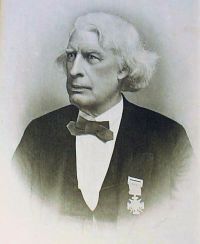
Albert Mackey

Albert Mackey

Summary

Portrait of Albert Mackey Albert Mackey The Principles of Masonic Law… (1856 | portal)

And it is now admitted that the Master of a lodge, to do justice to the exalted office which he holds, to the craft over whom he presides, and to the candidates whom he is to instruct, should be not only a man of irreproachable moral character, but also of expanded intellect and liberal education.
Source: Wikisource

Portrait of Albert Mackey Albert Mackey The Principles of Masonic Law… (1856 | portal)

But in the case of the death or removal of the Master or either of the Wardens, no election can be held to supply the vacancy, even by dispensation, for reasons which will appear when I come to treat of those offices.
No officer can resign his office after he has been installed. Every officer is elected for twelve months, and at his installation solemnly promises to perform the duties of that office until the next regular day of election; and hence the lodge cannot permit him, by a resignation, to violate his obligation of office.
Source: Wikisource

Portrait of Albert Mackey Albert Mackey The Principles of Masonic Law… (1856 | portal)

The qualifications requisite for the office of a Tiler are, that he must be "a worthy Master Mason." An Entered Apprentice, or a Fellow Craft, cannot tile a lodge, even though it be opened in his own degree. To none but Master Masons can this important duty of guardianship be intrusted. The Tiler is not necessarily a member of the lodge which he tiles. There is no regulation requiring this qualification. In fact, in large cities, one Brother often acts as the Tiler of several lodges.
Source: Wikisource

Get perspective with Kwize: daily news enlightened by great literature