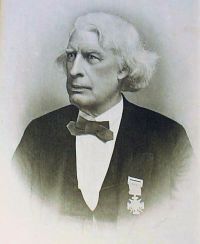
Albert Mackey

Albert Mackey

Summary

Portrait of Albert Mackey Albert Mackey The Principles of Masonic Law… (1856 | portal)

The ceremony of constitution is so called, because by it the lodge becomes constituted or established. Orthoepists define the verb to constitute, as signifying "to give a formal existence to anything." Hence, to constitute a lodge is to give it existence, character, and standing as such; and the instrument that warrants the person so constituting or establishing it, in this act, is very properly called the "warrant of constitution."
The consecration, dedication, and constitution of a lodge must be performed by the Grand Master in person
Source: Wikisource

Portrait of Albert Mackey Albert Mackey The Principles of Masonic Law… (1856 | portal)

The authority of the dispensation is temporary, that of the warrant permanent; the one can be revoked at pleasure by the Grand Master, who granted it; the other only for cause shown, and by the Grand Lodge; the one bestows only a name, the other both a name and a number; the one confers only the power of holding a lodge and making Masons, the other not only confers these powers, but also those of installation and of succession in office.
Source: Wikisource

Portrait of Albert Mackey Albert Mackey The Principles of Masonic Law… (1856 | portal)

Every lodge of Masons requires for its proper organization, that it should have been congregated by the permission of some superior authority, which may be either a Grand Master or a Grand Lodge. When a lodge is organized by the authority of a Grand Master, it is said to work under a Dispensation, and when by the authority of a Grand Lodge, it is said to work under a warrant of constitution.
Source: Wikisource

Get perspective with Kwize: daily news enlightened by great literature