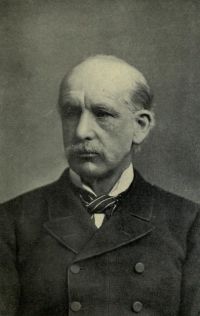
Alfred Comyn Lyall

Alfred Comyn Lyall

Summary

Portrait of Alfred Comyn Lyall Alfred Comyn Lyall 1911 Encyclopædia Britannica (1911)

The evacuation of Afghanistan was settled on the terms proposed, and in 1881 the British troops also made over Kandahar to the new amir; but Ayub Khan, one of Shere Ali’s sons, marched upon that city from Herat, defeated Abdur Rahman’s troops, and occupied the place in July. This serious reverse roused the amir, who had not at first displayed much activity. He led a force from Kabul, met Ayub’s army close to Kandahar, and the complete victory which he there won forced Ayub Khan to fly into Persia.
Source: Wikisource

Portrait of Alfred Comyn Lyall Alfred Comyn Lyall 1911 Encyclopædia Britannica (1911)

In 1885, at the moment when (see Afghanistan) the amir was in conference with the British viceroy, Lord Dufferin, in India, the news came of a collision between Russian and Afghan troops at Panjdeh, over a disputed point in the demarcation of the north-western frontier of Afghanistan. Abdur Rahman’s attitude at this critical juncture is a good example of his political sagacity. To one who had been a man of war from his youth up, who had won and lost many fights, the rout of a detachment and the forcible seizure of some debateable frontier lands was an untoward incident
Source: Wikisource

Get perspective with Kwize: daily news enlightened by great literature