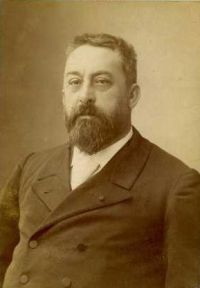
Alfred Nicolas Rambaud

Alfred Nicolas Rambaud

Summary

Portrait of Alfred Nicolas Rambaud Alfred Nicolas Rambaud History of Russia — Chapter 4 (1898)

This resolution of Sviatoslaf was fraught with immense danger to the Greek Empire. If Byzantium feared the neighborhood of an enfeebled Bulgaria, how was she to resist a power that extended from the Baltic to the Balkans, and which could add to the Bulgarian legions, disciplined after the Roman fashion by the Tzar Simeon, the Varangians of Scandinavia, the Russian Slavs, the Finnish hordes of the Vesses, Tchouds, and Merians, and even the light cavalry of the Patzinaks?
Source: Wikisource

Portrait of Alfred Nicolas Rambaud Alfred Nicolas Rambaud History of Russia — Chapter 4 (1898)

This mingling of the adventurers and the indigenous race explains the rapidity with which both the Normans of Russia and the Normans of France lost their language, customs and religion. The Varangians only retained one thing, their military superiority, the habit of obeying the chosen or hereditary chief. Into the Slav anarchy they brought this element of warlike and disciplined force, without which a State cannot exist.
Source: Wikisource

Portrait of Alfred Nicolas Rambaud Alfred Nicolas Rambaud History of Russia — Chapter 4 (1898)

At the head of an army composed of Varangians, Slavs and Finns, he marched to the south, received the submission of Smolensk and Loubetch, and arrived under the walls of Kief. By means of treachery he took Askold and Dir prisoners, and put them to death, observing: “You are neither princes yourselves, nor the blood of princes; this is the son of Rurik,” pointing to Igor. The tomb of Askold is still shown near Kief. Oleg was charmed with his new conquest, and took up his abode there, saying, “Let Kief be the mother of Russian cities.”
Source: Wikisource

Get perspective with Kwize: daily news enlightened by great literature