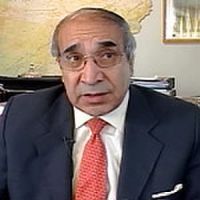
Ali Ahmad Jalali

Ali Ahmad Jalali

Summary

Portrait of Ali Ahmad Jalali Ali Ahmad Jalali The Other Side of the Mountain… (1995)

We fired mortars at the north slope andpositioned some Mujahideen on the top of Spin Ghar mountain to drawfire. This was the turning point. All of a sudden, helicopter activityfell off and firing tapered off in the valley. We thought that it was atrick to make us believe that the fighting was over so the Mujahideenwould come out of their hideouts and then they would take us frombehind. We did not expect that such a powerful enemy would abandonan almost certain victory and retire empty-handed. It was late after-noon when I saw civilians coming from Surkhab.
Source: Wikisource

Portrait of Ali Ahmad Jalali Ali Ahmad Jalali The Other Side of the Mountain… (1995)

In the cold dawn, the Soviet and DRA troops movedfrom their garrisons and, by 0800 hours, had occupied their normalblocking positions. Mohammad Shah Kako's base was at Sher-e Surkh where he commanded some 30 men. There were some 350 Mujahideenin the Malajat area from his party. The Mujahideen divided the frontline facing western Kandahar into four sectors. Each sector had about50 men. The northwest sector was a Hizbe-Islami sector. The Pakha Polan area was held by Mujahideen from Sher-e Surkh, Zaker-e Sharif and Kukhabad.
Source: Wikisource

Portrait of Ali Ahmad Jalali Ali Ahmad Jalali The Other Side of the Mountain… (1995)

During this stage of the war, the Mujahideen lived intheir own houses in the midst of the population. Their food, water andshelter was willingly supplied by the populace. As a result, many civil-ians died when the Soviets launched their operation. The largenumber of reported civilian deaths could be a result of lack of officers'control and unit discipline or deliberate policy.
Source: Wikisource

Get perspective with Kwize: daily news enlightened by great literature