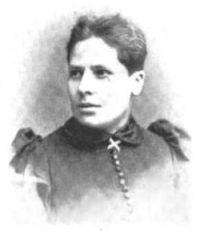
Alice Werner

Alice Werner

Folk-Lore (1899)

Summary

Portrait of Alice Werner Alice Werner Folk-Lore (1899)

So universally is the Kalulu's superiority insisted on, that I am inclined to think that the tales showing him as the defeated party (I can only recall one at this moment) are incomplete, and, like Cambuscan's, left half-told.
I may add that, to the best of my belief, there is only one Kalulu in the Shire Highlands, and he is quite as much of a hare as he is of a rabbit; more so indeed, for he does not live in warrens, but makes himself a form in the bush, even as our hare at home.
Source: Wikisource

Portrait of Alice Werner Alice Werner Folk-Lore (1899)

The people then came up, extricated him from the Tar-Baby's embraces, and informed him that they were going to kill him. "Very well," said he, "but don't kill me on the ground, kill me on the chief's back!" They returned to the village and spread a mat on the ground, on which the chief obligingly lay down, and the Rabbit squatted on his back. A strong warrior then prepared to spear the Rabbit and, as might be expected, killed the chief. Brer Rabbit having leaped into the air at the critical moment, made his escape without any difficulty, and the indignant villagers massacred the warrior.
Source: Wikisource

Portrait of Alice Werner Alice Werner Folk-Lore (1899)

It will not have escaped the reader's notice that Uncle Remus attributes to Brer Fox (and in one case to Brer B'ar) the part played by "the people" in these two African stories. In fact, except for Miss Meadows and the girls, so delightfully accounted for by the statement that "dey wuz in de tale," and one solitary appearance of "Mr. Man" (from whose superior power only Brer Rabbit can deliver Brer Fox) , the actors in the great majority of his tales are animals only. In the aboriginal African stories, however, the distinction is not very clearly marked.
Source: Wikisource

Get perspective with Kwize: daily news enlightened by great literature