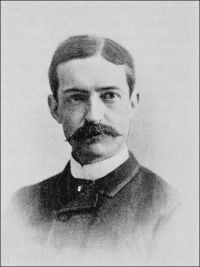
Thomas Frederick Crane

Thomas Frederick Crane

Summary

Portrait of Thomas Frederick Crane Thomas Frederick Crane,  Popular Science Monthly (1881)

“ The manners and customs of human beings are, after the usual fashion of fables, transferred to the animals in a way that excites the wonder of Uncle Remus's youthful auditor, and a mysterious Miss Meadows and "de gals" are introduced, with whom the animals are on terms of intimacy, and at whose house some of the most amusing incidents take place. ”
Source: Wikisource

Portrait of Thomas Frederick Crane Thomas Frederick Crane,  Popular Science Monthly (1881)

“ Too much praise can not be bestowed upon Mr. Harris for the manner in which he has executed his task: not only is the representation of the dialect better than anything that has heretofore been given, but he has shown himself a master in the difficult art of collecting popular tales. A glance at the variants of these stories published elsewhere will show the vast superiority of Mr. Harris's. It is not, however, in their literary character, interesting as it is, that we intend to examine briefly these fables, but simply in their relations to the similar tales of other countries. ”
Source: Wikisource

Portrait of Thomas Frederick Crane Thomas Frederick Crane,  Popular Science Monthly (1881)

“ The Cotia brags that he can ride the Jaguar, and the Deer promises to give him his daughter if he does. The Cotia pretends to be ill, and the Jaguar charitably takes him on his back, and even ties him on with a root, and gives him a switch. When the Cotia finds himself master of the situation, he whips the Jaguar unmercifully, and rides him by the Deer's house. In "Lippincott" the Rabbit and Wolf, in the other versions the Rabbit and Fox, are the parties concerned. ”
Source: Wikisource

Get perspective with Kwize: daily news enlightened by great literature