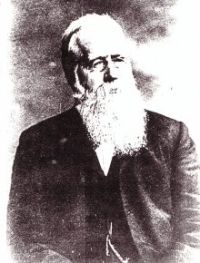
Andrew Seth Pringle-Pattison

Andrew Seth Pringle-Pattison

Summary

Portrait of Andrew Seth Pringle-Pattison Andrew Seth Pringle-Pattison 1911 Encyclopædia Britannica, Volume 28… (1911)

The doctrine of the pre-established harmony also loses its metaphysical significance, and the principle of sufficient reason introduced by Leibnitz is once more discarded in favour of the principle of contradiction which Wolff seeks to make the fundamental principle of philosophy. Philosophy is defined by him as the science of the possible, and divided, according to the two faculties of the human individual, into a theoretical and a practical part.
Source: Wikisource

Portrait of Andrew Seth Pringle-Pattison Andrew Seth Pringle-Pattison 1911 Encyclopædia Britannica, Volume 28… (1911)

Theoretical philosophy has for its parts ontology or philosophia prima, cosmology, rational psychology and natural theology; ontology treats of the existent in general psychology of the soul as a simple non-extended substance, cosmology of the world as a whole and rational theology of the existence and attributes of God. These are best known to philosophical students by Kant's treatment of them in the Critique of Pure Reason. Practical philosophy is subdivided into ethics, economics and politics. Wolff's moral principle is the realization of human perfection.
Source: Wikisource

Get perspective with Kwize: daily news enlightened by great literature