Summary

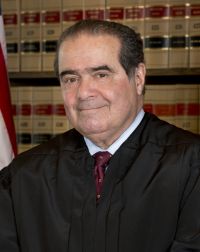
Portrait of Antonin Scalia Antonin Scalia Burns v. Reed — Opinion of the Court

I agree that a prosecutor has absolute immunity for eliciting false statements in a judicial hearing, and that he has only qualified immunity for giving legal advice to police officers. I write separately because I think petitioner also makes a claim, which we ought to consider, that a constitutional violation occurred in the prosecutor's initiation of the search warrant proceeding. My understanding of the common-law practice, which governs whether absolute immunity exists under § 1983, is that this prosecutorial action would have enjoyed only qualified immunity.
Source: Wikisource

Portrait of Antonin Scalia Antonin Scalia Burns v. Reed — Opinion of the Court

It could be argued, therefore, that a prosecutor's role in seeking a search warrant is akin to a prosecutor's role in seeking an indictment, and thus that Imbler § holding alone governs the present suit. But insofar as the relevant factors are concerned, this case is further from Imbler than was Malley, which denied absolute immunity to a policeman for procuring an arrest warrant. Imbler recognized absolute immunity out of a desire to protect actions "intimately associated with the judicial phase of the criminal process."
Source: Wikisource

Portrait of Antonin Scalia Antonin Scalia Burns v. Reed — Opinion of the Court

In the Court's view, petitioner makes two claims: (1) that the prosecutor gave incorrect legal advice, and (2) that he elicited false or misleading testimony at the hearing. As to the first, I agree that neither traditional judicial nor defamation immunity is applicable, though (as I have said) quasi-judicial immunity is. The prosecutor may therefore claim only qualified immunity. As to the second, I agree that the traditional defamation immunity is sufficient to provide a historical basis for absolute § 1983 immunity.
Source: Wikisource

Get perspective with Kwize: daily news enlightened by great literature