Summary

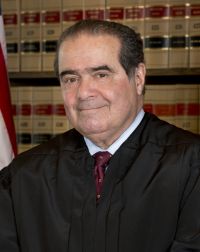
Portrait of Antonin Scalia Antonin Scalia County of Riverside v. McLaughlin… (1991)

The common-law rule of prompt hearing had as its primary beneficiaries the innocent—not those whose fully justified convictions must be overturned to scold the police; nor those who avoid conviction because the evidence, while convincing, does not establish guilt beyond a reasonable doubt; but those so blameless that there was not even good reason to arrest them. While in recent years we have invented novel applications of the Fourth Amendment to release the unquestionably guilty, we today repudiate one of its core applications so that the presumptively innocent may be left in jail.
Source: Wikisource

Portrait of Antonin Scalia Antonin Scalia County of Riverside v. McLaughlin… (1991)

Although we conclude that the Constitution does not require an adversary determination of probable cause, we recognize that state systems of criminal procedure vary widely. There is no single preferred pretrial procedure, and the nature of the probable cause determination usually will be shaped to accord with a State's pretrial procedure viewed as a whole. While we limit our holding to the precise requirement of the Fourth Amendment, we recognize the desirability of flexibility and experimentation by the States.
Source: Wikisource

Portrait of Antonin Scalia Antonin Scalia County of Riverside v. McLaughlin… (1991)

Of course even if the implication of the dictum in Gerstein were what the Court says, that would be poor reason for keeping a wrongfully arrested citizen in jail contrary to the clear dictates of the Fourth Amendment. What is most revealing of the frailty of today's opinion is that it relies upon nothing but that implication from a dictum, plus its own (quite irrefutable because entirely value laden) "balancing" of the competing demands of the individual and the State.
Source: Wikisource

Get perspective with Kwize: daily news enlightened by great literature