Summary

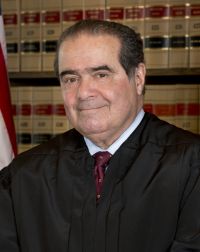
Portrait of Antonin Scalia Antonin Scalia Granfinanciera v. Nordberg — Opinion of the Court

The notion that the power to adjudicate a legal controversy between two private parties may be assigned to a non-Article III, yet federal, tribunal is entirely inconsistent with the origins of the public rights doctrine. The language of Article III itself, of course, admits of no exceptions; it directs unambiguously that the "judicial Power of the United States, shall be vested in one supreme Court, and in such inferior Courts as the Congress may from time to time ordain and establish."
Source: Wikisource

Portrait of Antonin Scalia Antonin Scalia Granfinanciera v. Nordberg — Opinion of the Court

In sum, it must be acknowledged that Congress has legislated treacherously close to the constitutional line by denying a jury trial in a fraudulent conveyance action in which the defendant has no claim against the estate. Nonetheless, given the significant federal interests involved, and the importance of permitting Congress at long last to fashion a modern bankruptcy system which places the basic rudiments of the bankruptcy process in the hands of an expert equitable tribunal, I cannot say that Congress has crossed the constitutional line on the facts of this case.
Source: Wikisource

Portrait of Antonin Scalia Antonin Scalia Granfinanciera v. Nordberg — Opinion of the Court

I would return to the longstanding principle that the public rights doctrine requires, at a minimum, that the United States be a party to the adjudication. On that basis, I concur in the Court's conclusion in Part IV of its opinion that the Article III concomitant of a jury trial could not be eliminated here. Since I join the remainder of the Court's opinion, I concur in its judgment as well.
Source: Wikisource

Get perspective with Kwize: daily news enlightened by great literature