Summary

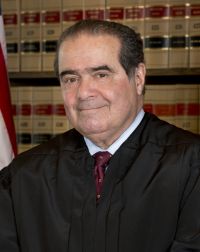
Portrait of Antonin Scalia Antonin Scalia Lawrence v. Texas — Dissenting Opinion (2003)

State laws against bigamy, same-sex marriage, adult incest, prostitution, masturbation, adultery, fornication, bestiality, and obscenity are likewise sustainable only in light of Bowers’ validation of laws based on moral choices. Every single one of these laws is called into question by today’s decision; the Court makes no effort to cabin the scope of its decision to exclude them from its holding.
Source: Wikisource

Portrait of Antonin Scalia Antonin Scalia Lawrence v. Texas — Dissenting Opinion (2003)

To be sure, §21.06 does distinguish between the sexes insofar as concerns the partner with whom the sexual acts are performed: men can violate the law only with other men, and women only with other women. But this cannot itself be a denial of equal protection, since it is precisely the same distinction regarding partner that is drawn in state laws prohibiting marriage with someone of the same sex while permitting marriage with someone of the opposite sex.
Source: Wikisource

Portrait of Antonin Scalia Antonin Scalia Lawrence v. Texas — Dissenting Opinion (2003)

No purpose to discriminate against men or women as a class can be gleaned from the Texas law, so rational-basis review applies. That review is readily satisfied here by the same rational basis that satisfied it in Bowers–society’s belief that certain forms of sexual behavior are “immoral and unacceptable,” 478 U.S., at 196. This is the same justification that supports many other laws regulating sexual behavior that make a distinction based upon the identity of the partner for example, laws against adultery, fornication, and adult incest, and laws refusing to recognize homosexual marriage.
Source: Wikisource

Get perspective with Kwize: daily news enlightened by great literature