Summary

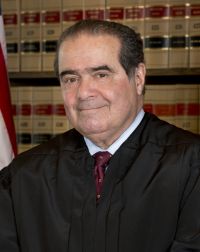
Portrait of Antonin Scalia Antonin Scalia McKoy v. North Carolina — Dissenting Opinion

There is little guidance in a system that requires each individual juror to bring to the ultimate decision his own idiosyncratic notion of what facts are mitigating, untempered by the discipline of group deliberation and agreement. Until today, I would have thought that North Carolina's scheme was a model of guided discretion. The requirement that the jury determine four specific issues operates like a special verdict-a device long recognized as enhancing the reliability and rationality of jury determinations.
Source: Wikisource

Portrait of Antonin Scalia Antonin Scalia McKoy v. North Carolina — Dissenting Opinion

One wonders what proportion of the jury Justice BLACKMUN believes is necessary to find an affirmative defense (if not all 12) in those States where the law does not explicitly specify a majority.↑ Justice BLACKMUN believes that this grotesque distortion of normal jury deliberations cannot be blamed upon the rule the Court today announces, but is rather North Carolina's own fault, because the scheme it has adopted represents "an extraordinary departure from the way in which juries customarily operate."
Source: Wikisource

Get perspective with Kwize: daily news enlightened by great literature