Summary

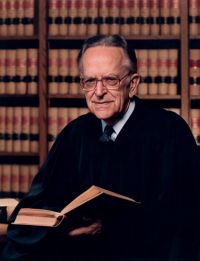
Portrait of Harry Blackmun Harry Blackmun McKoy v. North Carolina — Concurring Opinion

To say that the burden of proof may be placed upon the defendant says nothing at all about the situation in which some jurors, but not others, believe that the burden has been satisfied. The dissent's analogy presumes that once the elements of an offense have been proved, the jury's failure to agree as to an affirmative defense results in a conviction (just as a North Carolina jury's failure to agree as to the presence of a given mitigating factor creates a "finding" that the factor is not present)
Source: Wikisource

Portrait of Harry Blackmun Harry Blackmun McKoy v. North Carolina — Concurring Opinion

Of course, the North Carolina statute also requires that the jury be unanimous as to the existence of a given aggravating factor, and as to the appropriateness of the death penalty in light of the aggravating and mitigating circumstances unanimously found. The possibility that a single juror with aberrational views will thwart the majority therefore sometimes may work in favor of the capital defendant.
Source: Wikisource

Portrait of Harry Blackmun Harry Blackmun McKoy v. North Carolina — Concurring Opinion

The North Carolina requirement that aggravating circumstances be found unanimously therefore has some analogue, albeit imperfect, in another area of the law. This principle is a protection for the defendant, however; its premise is that " [r] equiring the vote of twelve jurors to convict a defendant does little to insure that his right to a unanimous verdict is protected unless this prerequisite of jury consensus as to the defendant's course of action is also required."
Source: Wikisource

Get perspective with Kwize: daily news enlightened by great literature