Summary

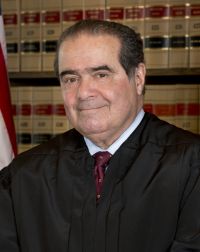
Portrait of Antonin Scalia Antonin Scalia Penry v. Lynaugh — Concurring Opinion

The decision whether to impose the death penalty is a unitary one; unguided discretion not to impose is unguided discretion to impose as well. In holding that the jury had to be free to deem Penry's mental retardation and sad childhood relevant for whatever purpose it wished, the Court has come full circle, not only permitting but requiring what Furman once condemned.
Source: Wikisource

Portrait of Antonin Scalia Antonin Scalia Penry v. Lynaugh — Concurring Opinion

The claim that the Court entertains and vindicates today flatly contradicts that analysis, holding that the constitutionality turns on whether the questions allow mitigating factors not only to be considered (and, of course, given effect in answering the questions) , but also to be given effect in all possible ways, including ways that the questions do not permit. It is simply not true that, as today's opinion asserts, the Jurek Court had before it "the express assurance that the special issues would permit the jury to fully consider all the mitigating evidence a defendant introduced."
Source: Wikisource

Portrait of Antonin Scalia Antonin Scalia Penry v. Lynaugh — Concurring Opinion

The Court contends that its conclusion is not inconsistent with Jurek because that case merely upheld a facial challenge to the Texas Special Issues framework. According to the Court, it did not "preclud [e] a claim that, in a particular case, the jury was unable to fully consider the mitigating evidence introduced by a defendant in answering the special issues." Ante, at 321. I disagree. While rejection of a facial challenge to a statute does not preclude all as-applied attacks, surely it precludes one resting upon the same asserted principle of law.
Source: Wikisource

Get perspective with Kwize: daily news enlightened by great literature