Summary

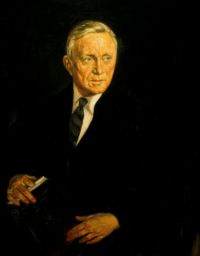
Portrait of William O. Douglas William O. Douglas Witherspoon v. Illinois — Concurrence

Nor is there any right to a jury chosen solely from those at the lower end of the economic and social scale. But there is a constitutional right to a jury drawn from a group which represents a cross-section of the community. And a cross-section of the community includes persons with varying degrees of training and intelligence and with varying economic and social positions. Under our Constitution, the jury is not to be made the representative of the most intelligent, the most wealthy or the most successful, nor of the least intelligent, the least wealthy or the least successful.
Source: Wikisource

Portrait of William O. Douglas William O. Douglas Witherspoon v. Illinois — Concurrence

Whether in other circumstances it states a defensible rule is a question we need not reach. Where the jury has the discretion to impose the death penalty or not to impose it, the Logan rule is, in my opinion, an improper one. For it results in weeding out those members of the community most likely to recommend mercy and to leave in those most likely not to recommend mercy. [10]
Challenges for cause and peremptory challenges do not conflict with the constitutional right of the accused to trial by an 'impartial jury.' No one is guaranteed a partial jury.
Source: Wikisource

Portrait of William O. Douglas William O. Douglas Witherspoon v. Illinois — Concurrence

The Court permits a State to eliminate from juries some of those who have conscientious scruples against the death penalty; but it allows those to serve who have no scruples against it as well as those who, having such scruples, nevertheless are deemed able to determine after a finding of guilt whether the death penalty or a lesser penalty should be imposed.
Source: Wikisource

Get perspective with Kwize: daily news enlightened by great literature