Summary

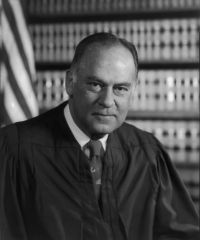
Portrait of Potter Stewart Potter Stewart Witherspoon v. Illinois — Opinion of the Court

Yet, in a nation less than half of whose people believe in the death penalty, [16] a jury composed exclusively of such people cannot speak for the community. Culled of all who harbor doubts about the wisdom of capital punishment-of all who would be reluctant to pronounce the extreme penalty-such a jury can speak only for a distinct and dwindling minority.
Source: Wikisource

Portrait of Potter Stewart Potter Stewart Witherspoon v. Illinois — Opinion of the Court

If the State had excluded only those prospective jurors who stated in advance of trial that they would not even consider returning a verdict of death, it could argue that the resulting jury was simply 'neutral' with respect to penalty. [18] But when it swept from the jury all who expressed conscientious or religious scruples against capital punishment and all who opposed it in principle, the State crossed the line of neutrality. In its quest for a jury capable of imposing the death penalty, the State produced a jury uncommonly willing to condemn a man to die.
Source: Wikisource

Portrait of Potter Stewart Potter Stewart Witherspoon v. Illinois — Opinion of the Court

The petitioner contends that a State cannot confer upon a jury selected in this matter the power to determine guilt. He maintains that such a jury, unlike one chosen at random from a crosssection of the community, must necessarily be biased in favor of conviction, for the kind of juror who would be unperturbed by the prospect of sending a man to his death, he contends, is the kind of juror who would too readily ignore the presumption of the defendant's innocence, accept the prosecution's version of the facts, and return a verdict of guilt.
Source: Wikisource

Get perspective with Kwize: daily news enlightened by great literature