Summary

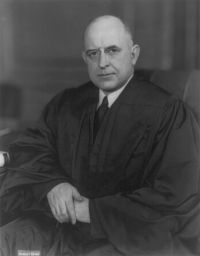
Portrait of Stanley Forman Reed Stanley Forman Reed Andres v. United States — Opinion of the Court

Legislation may leave with the jury the duty of finding an accused guilty of murder in the first degree but give them the right of remission of the death sentence, provided there is unanimous agreement on such remission. Any juror, of course, has it in his power to deadlock a jury out of sheer wilfulness or unreasonable obstinacy. But under such a statute the duty laid upon his conscience is to find guilt if there is guilt. The jury can save an accused from death only if they can reach a unanimous agreement to relieve from the doom.
Source: Wikisource

Portrait of Stanley Forman Reed Stanley Forman Reed Andres v. United States — Opinion of the Court

It seems to us, however, that where a jury is told first that their verdict must be unanimous, and later, in response to a question directed to the particular problem of qualified verdicts, that if their verdict is first-degree murder and they desire to qualify it, they must be unanimous in so doing, the jury might reasonably conclude that, if they cannot all agree to grant mercy, the verdict of guilt must stand unqualified.
Source: Wikisource

Portrait of Stanley Forman Reed Stanley Forman Reed Andres v. United States — Opinion of the Court

Charging a jury is not a matter of abracadabra. No part of the conduct of a criminal trial lays a heavier task upon the presiding judge. The charge is that part of the whole trial which probably exercises the weightiest influence upon jurors. It should guide their understanding after jurors have been subjected to confusion and deflection from the relevant by the stiff partisanship of counsel.
Source: Wikisource

Get perspective with Kwize: daily news enlightened by great literature