Summary

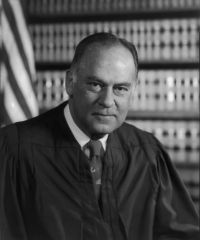
Portrait of Potter Stewart Potter Stewart United States v. Jackson (390 U.S. 570…

For the evil in the federal statute is not that it necessarily coerces guilty pleas and jury waivers but simply that it needlessly encourages them. A procedure need not be inherently coercive in order that it be held to impose an impermissible burden upon the assertion of a constitutional right. Thus the fact that the Federal Kidnaping Act tends to discourage defendants from insisting upon their innocence and demanding trial by jury hardly implies that every defendant who enters a guilty plea to a charge under the Act does so involuntarily.
Source: Wikisource

Portrait of Potter Stewart Potter Stewart United States v. Jackson (390 U.S. 570…

Under the Federal Kidnaping Act, therefore, the defendant who abandons the right to contest his guilt before a jury is assured that he cannot be executed; the defendant ingenuous enough to seek a jury acquittal stands forewarned that, if the jury finds him guilty and does not wish to spare his life, he will die. Our problem is to decide whether the Constitution permits the establishment of such a death penalty, applicable only to those defendants who assert the right to contest their guilt before a jury.
Source: Wikisource

Portrait of Potter Stewart Potter Stewart United States v. Jackson (390 U.S. 570…

The Congress can of course mitigate the severity of capital punishment. The goal of limiting the death penalty to cases is which a jury recommends it is an entirely legitimate one. But that goal can be achieved without penalizing those defendants who plead not guilty and demand jury trial. In some States, for example, the choice between life imprisonment and capital punishment is left to a jury in every case-regardless of how the defendant's guilt has been determined.
Source: Wikisource

Get perspective with Kwize: daily news enlightened by great literature