Summary

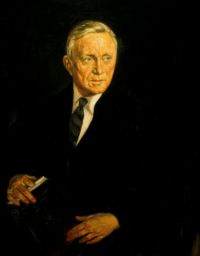
Portrait of William O. Douglas William O. Douglas Furman v. Georgia — Concurring Opinion

Those who wrote the Eighth Amendment knew what price their forebears had paid for a system based not on equal justice, but on discrimination. In those days, the target was not the blacks or the poor, but the dissenters, those who opposed absolutism in government, who struggled for a parliamentary regime, and who opposed governments' recurring efforts to foist a particular religion on the people.
Source: Wikisource

Portrait of William O. Douglas William O. Douglas Furman v. Georgia — Concurring Opinion

We have, I fear, taken in practice the same position, partially as a result of making the death penalty [p256] discretionary and partially as a result of the ability of the rich to purchase the services of the most respected and most resourceful legal talent in the Nation.
The high service rendered by the "cruel and unusual" punishment clause of the Eighth Amendment is to require legislatures to write penal laws that are evenhanded, nonselective, and nonarbitrary, and to require judges to see to it that general laws are not applied sparsely, selectively, and spottily to unpopular groups.
Source: Wikisource

Portrait of William O. Douglas William O. Douglas Furman v. Georgia — Concurring Opinion

But the words, at least when read in light of the English proscription against selective and irregular use of penalties, suggest that it is "cruel and unusual" to apply the death penalty — or any other penalty — selectively to minorities whose numbers are few, who are outcasts of society, and who are unpopular, but whom society is willing to see suffer though it would not countenance general application of the same penalty across the board.
Source: Wikisource

Get perspective with Kwize: daily news enlightened by great literature