Summary

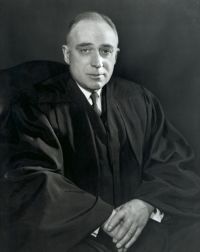
Portrait of John Marshall Harlan II John Marshall Harlan II Green v. United States (356 U.S. 165…

But the power to punish for willful disobedience of a court order, once found to exist, cannot be said to have atrophied by disuse in this particular instance. Indeed, when Congress in 1954 made bail-jumping a crime in 18 U.S.C. § 3146, 18 U.S.C.A. § 3146, it expressly preserved the contempt power in this very situation. We find support in neither history nor policy to carve out so singular an exception from the clear meaning of § 401 (3) .
Source: Wikisource

Portrait of John Marshall Harlan II John Marshall Harlan II Green v. United States (356 U.S. 165…

We do not write upon a clean slate. The principle that criminal contempts of court are not required to be tried by a jury under Article III or the Sixth Amendment is firmly rooted in our traditions. Indeed, the petitioners themselves have not contended that they were entitled to a jury trial. By the same token it is clear that criminal contempts, although subject, as we have held, to sentences of imprisonment exceeding one year, need not be prosecuted by indictment under the Fifth Amendment.
Source: Wikisource

Portrait of John Marshall Harlan II John Marshall Harlan II Green v. United States (356 U.S. 165…

There is no evidence of a broader purpose to enact so substantial a rule of substantive law encompassing all criminal contempts.
We are nevertheless urged to read into § 401 a one-year limitation on the sentencing power in order to avoid constitutional issues which the petitioners deem present in the absence of such a restriction. But in view of what we have shown, the section's provision that a federal court may punish 'at its discretion' the enumerated classes of contempts cannot reasonably be read to allow a court merely the choice between fines and imprisonment.
Source: Wikisource

Get perspective with Kwize: daily news enlightened by great literature