Summary

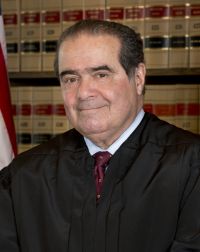
Portrait of Antonin Scalia Antonin Scalia Powers v. Ohio — Dissenting Opinion

Interpreting the recently enacted Fourteenth Amendment, we concluded that the statute violated the black defendant's equal protection right for the following reason:
"It is not easy to comprehend how it can be said that while every white man is entitled to a trial by a jury selected from persons of his own race or color, or, rather, selected without discrimination against his color, and a negro is not, the latter is equally protected by the law with the former. Is not protection of life and liberty against race or color prejudice, a right, a legal right, under the constitutional amendment?
Source: Wikisource

Portrait of Antonin Scalia Antonin Scalia Powers v. Ohio — Dissenting Opinion

To the contrary, an independent cause of action on the juror's part is quite incompatible with the opinion's repeated insistence that the stricken juror must be of the same race as the defendant. It would be absurd to suppose that a black juror has a right not to be discriminated against, through peremptory strike, in the trial of a black defendant, but not in the trial of a white defendant.
In sum, we have never held, or even said, that a juror has an equal protection right not to be excluded from a particular case through peremptory challenge
Source: Wikisource

Portrait of Antonin Scalia Antonin Scalia Powers v. Ohio — Dissenting Opinion

Whenever by any action of a State, whether through its legislature, through its courts, or through its executive or administrative officers, all persons of the African race are excluded, solely because of their race or color, from serving as grand jurors in the criminal prosecution of a person of the African race, the equal protection of the laws is denied to him, contrary to the Fourteenth Amendment of the Constitution of the United States.
Source: Wikisource

Get perspective with Kwize: daily news enlightened by great literature