Summary

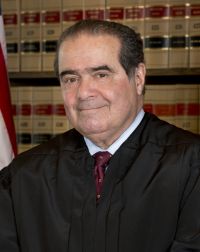
Portrait of Antonin Scalia Antonin Scalia Webster v. Reproductive Health Services… (1989)

It would be wrong, in any decision, to ignore the reality that our policy not to "formulate a rule of constitutional law broader than is required by the precise facts" has a frequently applied good-cause exception. But it seems particularly perverse to convert the policy into an absolute in the present case, in order to place beyond reach the inexpressibly "broader than was required by the precise facts" structure established by Roe v. Wade. The real question, then, is whether there are valid reasons to go beyond the most stingy possible holding today.
Source: Wikisource

Portrait of Antonin Scalia Antonin Scalia Webster v. Reproductive Health Services… (1989)

Ordinarily, speaking no more broadly than is absolutely required avoids throwing settled law into confusion; doing so today preserves a chaos that is evident to anyone who can read and count. Alone sufficient to justify a broad holding is the fact that our retaining control, through Roe, of what I believe to be, and many of our citizens recognize to be, a political issue, continuously distorts the public perception of the role of this Court.
Source: Wikisource

Portrait of Antonin Scalia Antonin Scalia Webster v. Reproductive Health Services… (1989)

And if these reasons for taking the unexceptional course of reaching a broader holding are not enough, then consider the nature of the constitutional question we avoid: in most cases, we do no harm by not speaking more broadly than the decision requires. Anyone affected by the conduct that the avoided holding would have prohibited will be able to challenge it himself and have his day in court to make the argument. Not so with respect to the harm that many States believed, pre-Roe, and many may continue to believe, is caused by largely unrestricted abortion.
Source: Wikisource

Get perspective with Kwize: daily news enlightened by great literature